
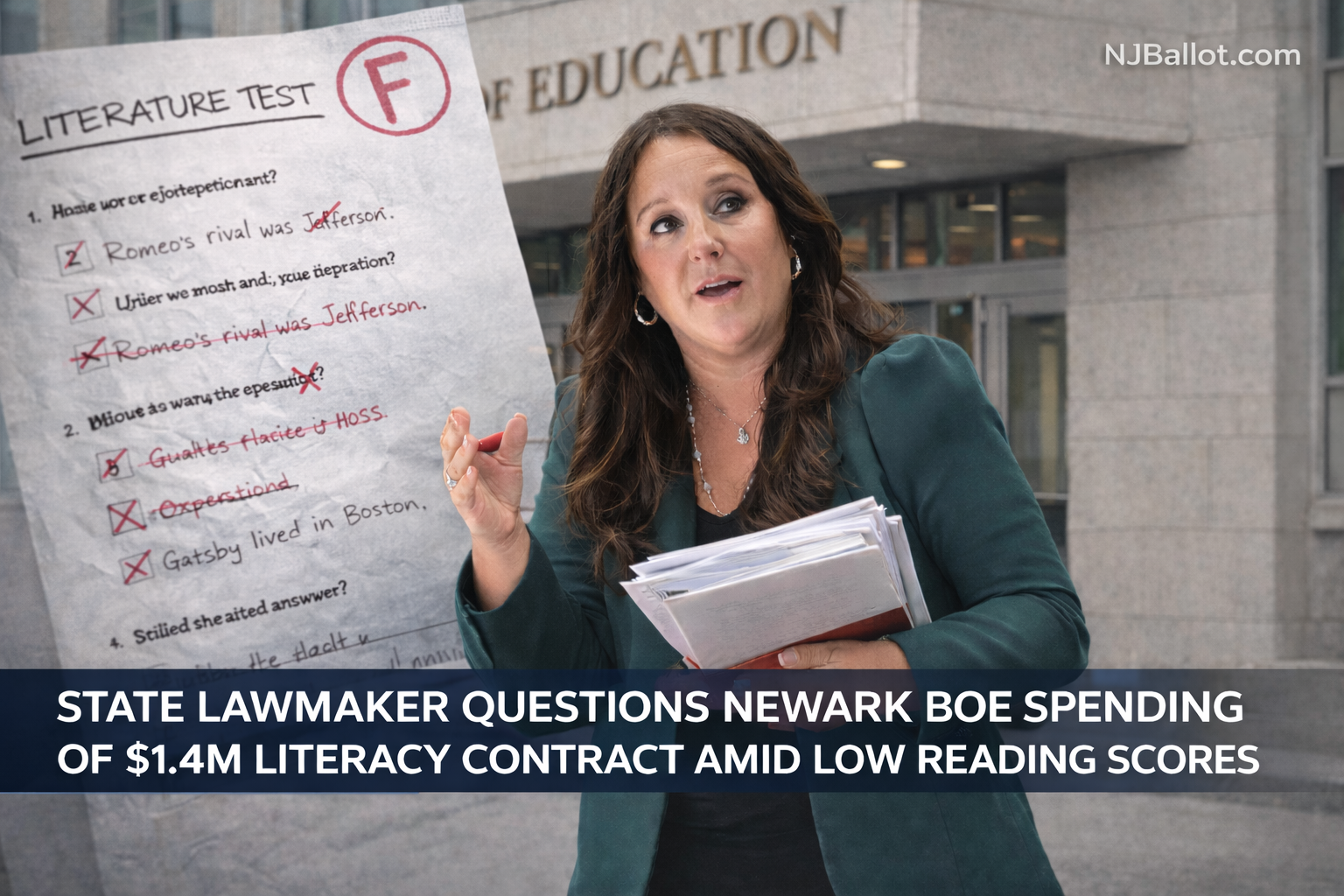

NEWARK — Assemblywoman Dawn Fantasia (R–Sussex), a Republican lawmaker in the New Jersey General Assembly, is publicly questioning a $1.4 million literacy contract approved by the Newark Board of Education after raising concerns as student reading proficiency remains low across the district.
Fantasia’s comments, posted publicly on Facebook, come as Newark continues to face persistent challenges in early literacy. Earlier post-pandemic data showed that roughly 19% of third-grade students were reading at grade level, a figure widely cited at the time. More recent state assessments indicate modest improvement in proficiency rates in subsequent years.
The contract at the center of the scrutiny authorizes up to $1.4 million in spending for literacy-related professional development services. It was awarded to consultant Jamie Walner of Mahwah, and is part of a broader initiative totaling roughly $3 million aimed at improving instructional practices across the district.
District officials have framed the effort as an investment in teacher training, with the goal of strengthening reading instruction in classrooms and addressing long-standing achievement gaps.
Board Vote and Internal Concerns
The Newark Board of Education approved the contract in a 6–1 vote.
Board member Crystal Williams cast the lone dissenting vote, raising concerns about the consultant’s qualifications and prior experience, as well as about how the program would be implemented.
Williams questioned how the services would directly support educators, and asked whether there was sufficient evidence that the approach would lead to measurable improvements in student outcomes. According to meeting discussions, several of those questions were not fully addressed prior to the vote.
Low Reading Proficiency Remains a Key Issue
The contract was approved against the backdrop of ongoing concerns about student performance in literacy.
Earlier post-pandemic reporting found that roughly 19% of Newark third graders were reading at grade level. More recent state data shows modest gains in English Language Arts proficiency since then, though rates remain well below statewide averages and continue to draw attention from educators, policymakers, and community stakeholders.
Education experts often point to third-grade reading proficiency as a key predictor of future academic success, making it a central focus for intervention efforts across school systems.
Newark Public Schools officials have previously attributed part of the decline in performance to pandemic-related disruptions, while also acknowledging that literacy challenges in the district predate COVID-19.
Fantasia Calls for Accountability
In the Facebook post, Fantasia said she was raising the issue “with receipts,” linking directly to Newark Board of Education records and highlighting the $1.4 million contract.
She wrote: “Where did federal grant and local taxpayer dollars go that were allocated to train staff and help students with literacy remediation?”
Her comments did not allege wrongdoing but emphasized the need for greater transparency and accountability in education spending, particularly when student outcomes remain low.
Standard Process, Broader Debate
The contract was approved through Newark’s standard procurement process, which includes a proposal review and authorization by the elected school board.
Professional development initiatives of this kind are common in school districts across New Jersey and nationwide, particularly as systems work to address learning loss and improve instructional quality.
However, the effectiveness of such programs often depends on implementation, oversight and long-term follow-through, factors that continue to be debated by policymakers and education leaders.
The issue is likely to remain part of a broader conversation about education funding and student performance in New Jersey.
As districts continue to invest in literacy programs, questions about how those funds are used—and whether they lead to measurable improvements—are expected to remain a central focus for both local officials and state lawmakers.
Sources
• Newark Board of Education, public meeting records and contract information (2024-2026)
• TAPinto Newark, “Newark’s Third Grade Reading Scores Stagnant With Only 19% Proficient” (September 29, 2023)
• Laura Waters, NJEd Report, “A District Flush with Federal Cash Bets Big on a Retired Teacher, Then Backtracks” (July 29, 2024)
• Facebook and X posts from Assemblywoman Dawn Fantasia (April 6, 2026)