
Editor's Note, 4:00 PM: An incomplete draft of this article was previously published. NJBallot.com apologizes for the oversight.
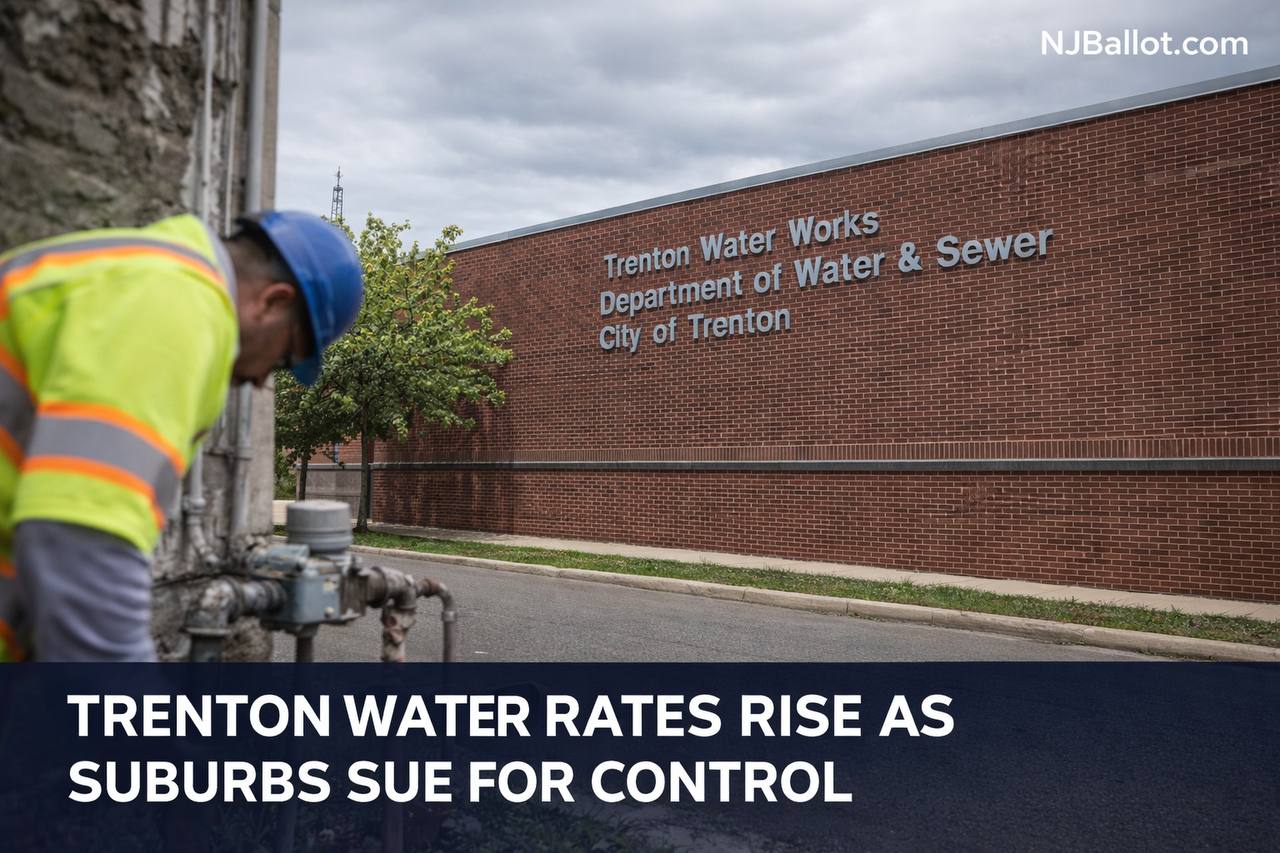
TRENTON—Customers in and around New Jersey’s capital will pay $5.28 more per quarter starting July 1, 2026, the first rate hike for Trenton Water Works in 17 years. For Trenton's renters, who earn a median $31,593 and make up 62% of the city, that's real money.
While Trenton raises rates on its poorest residents, the four wealthier suburbs surrounding the capital have sued to seize control of the over 200-year-old utility, arguing the city cannot manage the system they depend on.
Mayor Reed Gusciora calls the increase necessary to fund $763 million in repairs. But the state warns the actual need is $1.7 billion, more than double Gusciora’s estimate, raising questions about whether the rate hike is a solution or a stopgap.
The Hike and The Lawsuit
The March 11 announcement ends a 17-year freeze on rate increases. The $5.28 quarterly hike ($21 per year) funds $78 million in Infrastructure Bank financing, $20 million for smart meters, and $175 million for lead line replacement. While 11,000 lead water lines in Trenton have been replaced since 2019, 20,000 remain.
The rate increases also affect residents in the four suburbs surrounding Trenton: Hamilton, Hopewell, Ewing and Lawrence. In December of 2025, the four suburban municipalities joined the state Department of Environmental Protection’s lawsuit against Trenton Water Works, aiming to force regionalization. Hopewell explicitly seeks a seat at the table and demands control over the utility serving its residents.
The suburbs fund 56% of TWW revenues through their water bills and legally challenge Trenton's ownership, demanding a share of the control. Meanwhile, the capital city raises rates on its much poorer residents to fund repairs that the suburbs claim are insufficient.
Divides along Income and Race are Factors
The mathematics are stark. Trenton renters, which total about 62% of the city’s households, earn a median $31,593 in a city where 21.6% live below poverty. Homeowners fare better at $63,501 median. But in Hopewell, the median is $145,114. The other suburbs hover around a median of $100,000, a figure still far higher than Trenton’s.
Independent journalist Marc Leckington, who documents TWW operations on his Substack, has argued that the city’s capital improvement plan lacks transparency and sufficient investment to achieve stability. Rate projections show the danger: under the initial plan introduced in January, TWW customers could have seen their bills rise by as much as 60 percent by 2030. The final approved rates, though not as stark, still represent an increased burden on Trentonians, especially those who rent.
Trenton Water Works is America's oldest publicly owned water utility, and it has been in the city’s hands since it purchased the privately-founded system in 1859 for $88,000. Decades of disinvestment created what NJDEP Commissioner Shawn LaTourette called "an outgrowth of systemic racism itself" in an August 2025 meeting with City Council.
The racial dimension is unavoidable: Trenton is 46% Hispanic and 40% Black. The suing suburbs are predominantly white and wealthier. That sense of division has occasionally caused emotions to flare about TWW. In the August meeting, City Councilwoman Teska Frisby argued in that regionalization could represent "a Black Wall Street incident about to happen to us once again." Her comments referenced a 1921 white supremacist massacre in Tulsa, Oklahoma, that destroyed a thriving Black economic hub. LaTourette pushed back on Frisby’s metaphor, underscoring the City government’s long role in creating the current situation. "Compliance with the law is your obligation, not mine," he told the Council.
What Happens Next
The rate hike takes effect July 1, 2026, unless courts intervene. Meanwhile, the suburbs’ lawsuit and the city’s lead line replacement project both continue forward.
This case highlights the challenges of citizens caught in the crossfire between state and municipal governments. Trenton says it will deliver. The suburbs say they can do better. The DEP just wants the whole thing solved. But the renters earning $31,000 a year will pay either way.
Sources
• Reed Gusciora, "Building a Better Trenton Water Works," The Trentonian (March 12, 2026)
• NJ.com, "Trenton Utility Seeks to Raise Water Rates for the First Time in 17 Years" (January 28, 2026)
• Report for New Jersey Department of Environmental Protection, "360 Degree Review of Trenton Water Works: A Comparative Analysis of Governance and Asset/Liability Optimization" (January 2025)
• Marc Leckington, From the Mains of Trenton, "A 14% Water Rate Increase, a 60% Reality" (January 6, 2026)
• Hopewell Township News, "Hopewell Township Joins Regional Partners in Legal Action Against the City of Trenton and TWW" (December 2, 2025)
• Township of Lawrence, "Hopewell Township Joins Ewing, Hamilton, and Lawrence Townships in Legal Action Against the City of Trenton and Trenton Water Works" (November 25, 2025)
• Bill Sanservino, CommunityNews, "Debate rages over control of Trenton Water Works" (August 29, 2025)
• Trenton Journal, "A Utility Under Pressure: Compliance Failures, Rate Hikes, and Lingering Public Distrust" (September 29, 2025)
• U.S. Census Bureau, QuickFacts: Trenton city (2023)
• U.S. Census Bureau, QuickFacts: Hamilton township (2023)
• Niche, Hopewell Township demographics (2024)
•
TrentonHistory.org,
"The Trenton Water Works: A History"